For 2013 I decided to participate in the Patchwork Challenge, but as the maximum patch size for the challenge could only be 3km2 I had to severely trim my more larger normal patch to take part. So after a few trials to try to meet the size requirements, I ended up going with a patch which roughly used the clifftop coastal path as the northern boundary and the main coast road as the southern boundary, but excluding most of the urban areas of Overstrand, Cromer and the Runtons, as well as a few private caravan sites. In addition it also included Felbrigg Park, and the odd small area just south of the coast road which I regularly visit, and in total ran from Beeston Bump in the west along to Sidestrand in the east.

Sadly with some patchers already over their yearly targets by a relatively early stage and the comparative score of some competitors, which the challenge was based on, being anything but, the challenge was in effect over almost before it had began, but as I would naturally be patching anyway I carried on regardless, with as ever trying to beat last years total. Having tallied up my 2012 total for this 3km patch 180 birds (including Blue-headed Wagtail) was my target to beat for this year, and below is a monthly account of how my year on the patch went.
January
With my January birding being dominated by my participation in the 'Foot-it' competition, plus my traditional Jan 1st Day-List, both of which took me out of the confines of my 3km patch, the month started off abit confusingly as it was a case of having to see some species twice to ensure I'd seen them with my PWC patch.
However the month, and the Challenge in general, got off to a great start with 69 species recorded on the 1st including the double-whammy of a Little Egret which I had not seen at all on patch in 2012, and my first ever wintering Green Sands for the patch found in the same ditch in Felbrigg Park! Shag, Whooper Swan and Med Gull were also notables seen on the 1st.
Felbrigg was also the destination for the next very notable addition with a Bittern, which subsequently took up residence in the reed-bed by the lake (see photos in previous posts) seen on the 3rd, and which was only my 2nd for the patch.
A Long-tailed Duck which had joined the Common Scoter flock off Overstrand was seen on the 5th, and made it the third species seen in the first week of the year that I'd not seen at all in 2012!
A Velvet Scoter off the Runtons on the 6th was a species I don't get every year, and a Chiffchaff at West Runton on the 7th, and a small passage of Great Skuas, and a Little Gull in mid-month gales were both species that I didn't expect till later in the year.
Only my third ever patch Woodlark was an excellent find on the 26th, and a flock of Waxwings a hundred yards from my house on the 27th were an excellent close to the first month of the challenge, during which I'd chalked up 110 species. An additional mention must also go to the Kingfisher seen at Gimingham, which although outside of the 3km patch, was only my 2nd ever record of one within my more normal patch.

1
|
Mute Swan
|
01-Jan
|
41
|
Woodpigeon
|
01-Jan
|
81
|
Nuthatch
|
04-Jan
|
2
|
Whooper Swan
|
01-Jan
|
42
|
Barn Owl
|
01-Jan
|
82
|
Treecreeper
|
04-Jan
|
3
|
Greylag Goose
|
01-Jan
|
43
|
Great Spotted Woodpecker
|
01-Jan
|
83
|
Peregrine
|
04-Jan
|
4
|
Egyptian Goose
|
01-Jan
|
44
|
Skylark
|
01-Jan
|
84
|
Brent Goose
|
05-Jan
|
5
|
Wigeon
|
01-Jan
|
45
|
Wren
|
01-Jan
|
85
|
Shelduck
|
05-Jan
|
6
|
Gadwall
|
01-Jan
|
46
|
Robin
|
01-Jan
|
86
|
Long-tailed Duck
|
05-Jan
|
7
|
Teal
|
01-Jan
|
47
|
Blackbird
|
01-Jan
|
87
|
Rock Dove / Feral Pigeon
|
05-Jan
|
8
|
Mallard
|
01-Jan
|
48
|
Song Thrush
|
01-Jan
|
88
|
Pied Wagtail
|
05-Jan
|
9
|
Pochard
|
01-Jan
|
49
|
Goldcrest
|
01-Jan
|
89
|
Stock Dove
|
06-Jan
|
10
|
Tufted Duck
|
01-Jan
|
50
|
Long-tailed Tit
|
01-Jan
|
90
|
Velvet Scoter
|
06-Jan
|
11
|
Common Scoter
|
01-Jan
|
51
|
Blue Tit
|
01-Jan
|
91
|
Green Woodpecker
|
07-Jan
|
12
|
Red-legged Partridge
|
01-Jan
|
52
|
Great Tit
|
01-Jan
|
92
|
Coot
|
07-Jan
|
13
|
Pheasant
|
01-Jan
|
53
|
Coal Tit
|
01-Jan
|
93
|
Chiffchaff
|
07-Jan
|
14
|
Red-throated Diver
|
01-Jan
|
54
|
Marsh Tit
|
01-Jan
|
94
|
Sparrowhawk
|
08-Jan
|
15
|
Fulmar
|
01-Jan
|
55
|
Jay
|
01-Jan
|
95
|
Goldeneye
|
11-Jan
|
16
|
Gannet
|
01-Jan
|
56
|
Magpie
|
01-Jan
|
96
|
Snipe
|
11-Jan
|
17
|
Cormorant
|
01-Jan
|
57
|
Jackdaw
|
01-Jan
|
97
|
Fieldfare
|
13-Jan
|
18
|
Shag
|
01-Jan
|
58
|
Rook
|
01-Jan
|
98
|
Redwing
|
13-Jan
|
19
|
Little Egret
|
01-Jan
|
59
|
Carrion Crow
|
01-Jan
|
99
|
Golden Plover
|
14-Jan
|
20
|
Grey Heron
|
01-Jan
|
60
|
Starling
|
01-Jan
|
100
|
Pintail
|
15-Jan
|
21
|
Buzzard
|
01-Jan
|
61
|
House Sparrow
|
01-Jan
|
101
|
Dunlin
|
15-Jan
|
22
|
Kestrel
|
01-Jan
|
62
|
Chaffinch
|
01-Jan
|
102
|
Great Skua
|
19-Jan
|
23
|
Water Rail
|
01-Jan
|
63
|
Greenfinch
|
01-Jan
|
103
|
Goosander
|
20-Jan
|
24
|
Moorhen
|
01-Jan
|
64
|
Goldfinch
|
01-Jan
|
104
|
Bar-tailed Godwit
|
20-Jan
|
25
|
Oystercatcher
|
01-Jan
|
65
|
Siskin
|
01-Jan
|
105
|
Little Gull
|
20-Jan
|
26
|
Ringed Plover
|
01-Jan
|
66
|
Linnet
|
01-Jan
|
106
|
Yellowhammer
|
24-Jan
|
27
|
Grey Plover
|
01-Jan
|
67
|
Bullfinch
|
01-Jan
|
107
|
Lesser Redpoll
|
24-Jan
|
28
|
Lapwing
|
01-Jan
|
68
|
Reed Bunting
|
01-Jan
|
108
|
Lesser Black-backed Gull
|
26-Jan
|
29
|
Knot
|
01-Jan
|
69
|
Great Black-backed Gull
|
01-Jan
|
109
|
Woodlark
|
26-Jan
|
30
|
Sanderling
|
01-Jan
|
70
|
Eider
|
02-Jan
|
110
|
Waxwing
|
27-Jan
|
31
|
Woodcock
|
01-Jan
|
71
|
Great Crested Grebe
|
02-Jan
|
|
|
|
32
|
Green Sandpiper
|
01-Jan
|
72
|
Curlew
|
02-Jan
|
|
|
|
33
|
Redshank
|
01-Jan
|
73
|
Collared Dove
|
02-Jan
|
|
|
|
34
|
Turnstone
|
01-Jan
|
74
|
Meadow Pipit
|
02-Jan
|
|
|
|
35
|
Kittiwake
|
01-Jan
|
75
|
Dunnock
|
02-Jan
|
|
|
|
36
|
Black-headed Gull
|
01-Jan
|
76
|
Pink-footed Goose
|
03-Jan
|
|
|
|
37
|
Mediterranean Gull
|
01-Jan
|
77
|
Bittern
|
03-Jan
|
|
|
|
38
|
Common Gull
|
01-Jan
|
78
|
Little Owl
|
03-Jan
|
|
|
|
39
|
Herring Gull
|
01-Jan
|
79
|
Tawny Owl
|
04-Jan
|
|
|
|
40
|
Guillemot
|
01-Jan
|
80
|
Mistle Thrush
|
04-Jan
|
|
|
|
February & March
In stark contrast to Januaury, February was very hard going with only the single addition to the PWC total with a pair of Canada Geese (111) at Felbrigg.
March was slightly better with new species for the year recorded being Stonechat (112), a pair of Red Kites (113) which looked like they were going to breed on the patch but sadly they disappeared after a few weeks, a Glaucous Gull (114) seen from Beeston Bump, along with a Razorbill (115), and the month closed with a Grey Wagtail and 116 species on the board.

April
The first bird of the month was a very welcome surprise, when a White-tailed Eagle, my 2nd for the patch was seen distantly from Cromer golfcourse on the 6th, which subsequently headed round the coast and into Suffolk.
Spring migration finally hit the patch with the first Wheatear at West Runton on the 7th, along with the bonus of a Purple Sandpiper on the beach there.
The migrants continued to pass through as the month progressed, with the 13th being a double bonus day with firstly a Jack Snipe at West Runton and then my first ever patch Rough-legged Buzzard at Sidestrand.
The next few days produced Ring Ouzel, a couple of Short-eared Owls, Marsh Harrier, Firecrest and Cuckoo which were all welcome additions of species that usually require a bit of luck to get on the patch, but the 19th was a definite red-letter day with only my second ever sighting on the patch of Bearded Tit with two at Sidestrand, quickly followed by a Grey Partridge which was always going to be a difficult bird to get from the patch, and then the icing on the cake of my first ever patch Tree Sparrow also at Sidestrand.


Next day a flock of 7 Common Cranes headed through the patch which always require a good slice of luck to catch up with on patch as they make the occasional flight away from their Broadland home.
Other good species recorded during the remainder of the month included Hobby, Garden Warbler, Spotted Flycatcher and this stunning Blue-headed Wagtail found at Beeston Regis, together with a Whimbrel, and April finished with 39 new birds recorded bringing the total to 155.


117
|
White-tailed Eagle
|
06-Apr
|
137
|
Marsh Harrier
|
15-Apr
|
118
|
Wheatear
|
07-Apr
|
138
|
Firecrest
|
15-Apr
|
119
|
Purple Sandpiper
|
07-Apr
|
139
|
Blackcap
|
17-Apr
|
120
|
Swallow
|
12-Apr
|
140
|
Reed Warbler
|
18-Apr
|
121
|
Black Redstart
|
12-Apr
|
141
|
Cuckoo
|
18-Apr
|
122
|
Sandwich Tern
|
12-Apr
|
142
|
Common Sandpiper
|
18-Apr
|
123
|
Whimbrel
|
12-Apr
|
143
|
Common Tern
|
18-Apr
|
124
|
Rough-legged Buzzard
|
13-Apr
|
144
|
Arctic Tern
|
18-Apr
|
125
|
Ring Ouzel
|
13-Apr
|
145
|
Bearded Tit
|
19-Apr
|
126
|
Jack Snipe
|
13-Apr
|
146
|
Grey Partridge
|
19-Apr
|
127
|
Sand Martin
|
13-Apr
|
147
|
Tree Sparrow
|
19-Apr
|
128
|
House Martin
|
13-Apr
|
148
|
Crane
|
20-Apr
|
129
|
Willow Warbler
|
13-Apr
|
149
|
Lesser Whitethroat
|
21-Apr
|
130
|
Brambling
|
13-Apr
|
150
|
Hobby
|
24-Apr
|
131
|
Short-eared Owl
|
14-Apr
|
151
|
Whinchat
|
24-Apr
|
132
|
Yellow Wagtail
|
14-Apr
|
152
|
Swift
|
25-Apr
|
133
|
Sedge Warbler
|
15-Apr
|
153
|
Blue-headed Wagtail
|
25-Apr
|
134
|
Whitethroat
|
15-Apr
|
154
|
Garden Warbler
|
26-Apr
|
135
|
Little Grebe
|
15-Apr
|
155
|
Spotted Flycatcher
|
29-Apr
|
136
|
Shoveler
|
15-Apr
|
|
|
|
May
In contrast to Aprils big haul, it was more of a case of quality over quantity in May. The month kicked off with, after an eight month absence, a Mandarin (156) finally putting in a very welcome re-appearance on Felbrigg Lake, then following the second patch Rough-legged Buzzard of the year this time over Cromer, the 6th saw a Woodchat Shrike (157) spend the morning on Cromer golf-course, my fourth patch record and second for the GC itself, and whilst watching it 3 separate Tree Pipits (158) flew over as an added bonus.
The new water meadow at Felbrigg then came up trumps with only my second patch Garganey (159) there on the 7th, and which follows hot on the heels of last years pair on the lake itself.
The sea then produced the first Little Terns (160) of the summer on the 9th, and then a nice passage of 23 Manx Shearwaters (161) past during the evening of the 15th.
The 25th saw my personal highlight of the month when with various migrants appearing along the coast, after flogging every supposed hot-spot on the patch and drawing a blank, I ironically found a stunning male Red-backed Shrike (162) just a short walk from the house at a location that I rarely ever check, and just goes to show that every inch of the patch is always worth checking!
Final highlight of the month was after not recording one since 2008, I had two separate Turtle Doves, including the one below on wires in the village, and brought the species total for the year to 163.
June-August
After the highs of May, it was back down to earth with a large bump in June with not a single new species for the PWC being found! July was slightly better with a drake Scaup (164) , and then the first Common Crossbill (165) of the year appearing in Felbrigg Park.
August started on a similar slow pace with a Red-necked Grebe (166) on the 15th being the only highlight of the first half of the month, but worthy mention should also go to the Sparrow sp. at Northrepps; hybrid, aberration or pure Italian Sparrow not sure we'll ever know for sure but a very striking bird nonetheless.


As hoped for things finally picked up in the last couple of weeks starting with my first ever patch Wood Sandpipers (167) in off the sea by Cromer lighthouse on the 20th, and then a nice fall of migrants from the 24th producing Pied Flycatcher (168), Redstart (169) and a brief Wryneck (170) by Beeston Bump. The first Arctic Skua (171) of the year was also noted offshore.
The 25th produced a fly-over Greenshank (172) and a Long-tailed Skua (173) offshore from Overstrand, then a return to Beeston resulted in my 2nd self-found Red-backed Shrike of the year, and this time excellent views were had of the Wryneck, with what was undoubtedly a second bird also briefly seen.

With good numbers present off the north coast, after a lot of looking it was finally a relief to connect with a couple of Balearic Shearwaters off Overstrand on the 26th which proved to be the last new birds of the month, and so finishing August on 174.
September
Sea passage produced the sole highlights during September with my only new species for the challenge being the trio of Sooty Shearwater (175) on the 10th, Black Guillemot (176) on the 11th and a Sabines Gull (177) on the 14th moving me to within 4 of my target of 181 to beat last years haul.
October
October got off to a great start with a pair of Snow Buntings (178) along the cliffs at West Runton on the 1st, where also this freshly arrived Wheatear allowed close approach.

Although just outside my 3km patch, a Red-breasted Flycatcher at Trimingham on the 2nd was only my third for my wider patch so was still greatly received, and the birds continued on the 3rd when I found the first of 4 Yellow-browed Warblers (179) on the patch during the month at Cromer. The first Rock Pipits (180) of the year were noted moving through on the 7th and then seawatching off Cromer on 9th produced the trio of Red-breasted Merganser (181), Pomarine Skua (182) and a pair of Barnacle Geese (183) and my target for the year was well and truly broken.
A few Purple Sandpipers had also been noted passing by, and it was nice to find this confiding bird sheltering from the stormy winds behind the promenade wall.
The 12th saw good numbers of birds arriving on the coast and the day started excellently with a Great Grey Shrike (184) in off the sea by Cromer lighthouse, and despite previously only having ever seen one before within the 3km patch, amazingly a further two were recorded during the day with further birds at West Runton and this one at East Runton.

Regular checking of the cliff-top fields at West Runton over the last few weeks had produced little save for a Jack Snipe and a potential Vagrant Emperor Dragonfly in off the sea but which just headed strongly inland without stopping, but a visit on the afternoon of the 12th turned up the goods in the very unexpected form of a Dusky Warbler (185), a very pleasing find to say the least. I'd heard one a few years back at Sidestrand but failed to see it, so this was as good as a new patch bird, and was nice to share with the locals too despite it being far from co-operative during its 6 day stay! Final new bird of a very memorable day was a freshly arrived Mealy Redpoll (186) which was feeding in one of the nearby fields.
A Great Northern Diver (187) was noted past Cromer on the 13th, and the fields at West Runton again paid dividends with a couple of Lapland Buntings (188) on the 14th, along with a very confiding Shag there on the slip-way.


News on the 18th that 4 Glossy Ibis (189) were heading eastwards along the coast had me rushing to the high point of Beeston Bump in case they carried on their journey towards the patch, and to my delight that is exactly what they did as I picked them up coming from a long way to the west and watched as they safely made it into the patch proper and carried on east past Cromer along the sea. Sadly I didn't have my usual digi-scoping lens on my scope so just managed a record shot of 3 of them as they passed by, but nonetheless an excellent new addition to the patch list.

Later that afternoon the first identification challenge of the week occurred with a potential female Parrot Crossbill watched amongst the Common Crossbill flock which has built up in Felbrigg Park over the last couple of weeks, with a couple of record shots of it below. Furthermore that evening whilst by the lighthouse a Crossbill sp. flew along the cliffs calling and which was significantly deeper in tone than any of the Common Crossbills that I'd heard in Felbrigg that afternoon.
Thankfully the 19th brought something alot easier to identify as amongst a large passage of Finches and Starlings which were moving through, a Richards Pipit (190) landed on the clifftop in front of me whilst walking along the golf-course. Inevitably it was quickly pushed off by a combination of walkers and golfers but I managed a quick flight shot as it bounded past me calling away as it headed off along the cliffs.

A different identification challenge occurred on the 21st with a Swift sp. over Felbrigg Park, but the wind, rain and poor light all combined to hamper a satisfactory identification before it drifted off towards the Hall. However that was far from the end of the saga, with another one over Cromer on the evening of the 23rd and then presumably the original bird still over Felbrigg Park on the 24th but thankfully views this time were sufficient enough to confirm it was indeed a Pallid Swift (191).
Just prior to the swift appearing, I was again busily sifting through the Crossbills in the park and came across the female pictured below, which with better views and photos than before, plus a bit of investigation, I'm happy is indeed a Parrot Crossbill (192), though I'm not entirely sure if its the same one as pictured above or not. Naturally the identification of female Parrot Crossbills is a bigger challenge than that of the larger billed males, but nevertheless whilst the bill is invaribly smaller, importantly the shape remains constant, and I feel that on this bird the structure of the bill is spot on and that there is also a good suite of additional features as back-up to help nail the identification.
Looking at the photos below it can be seen that its stout bill is as deep as its long, with an obvious bulge to the lower mandible. There is no protrusion of the lower mandible past the upper, the cutting edges to the bill are noticably ivory-coloured, and the upper mandible is strongly down-curved too. It has a bull-necked appearance with 'full' cheeks, appears pot-bellied, small-eyed and short-tailed and is very grey around the head, nape and mantle contrasting with the rump and underparts. Furthermore, and particulary evident in the second photo, it also shows a flattish crown with little forehead evident above the bill, and in the third head-on photo the wide base of the lower mandible is evident.


Felbrigg also contributed the next new species for the year with a Hawfinch (193) seen behind the Hall where one over-wintered a few years back, so hopefully it will hang around again this year too.
The late autumn Swift phenomenon continued with what was presumably the same Pallid Swift as I'd had on the 23rd again over Cromer on the evening of the 25th, and then on the 26th I had further Pallids over Overstrand and also over Sidestrand/Trimingham, with two together along the cliffs at Cromer that evening. Just how many were on the patch this week is anyones guess but I would think there was a minimum of three. It would be interesting to see if there is any photo evidence that any of the Swifts seen around the Country during this influx were unequivocally Common Swifts, or if all birds, and indeed those recorded in previous late autumn influxes were all Pallids as alot of people are starting to suspect.
Taking decent photos of a fast-flying Swift with a compact camera is a near impossible task, and unsurprisingly I only managed these record shots which are the best of a very poor bunch, with far better ones available elsewhere on the net such as here.


The 27th saw me add Pallid Swift to the window list as one of yesterdays evenings birds headed along the coast from Cromer back to the Sidestrand/Trimingham area, and then whilst waiting at Cromer in the evening for one to hopefully return, I received a very excited phone call to say a Black-browed Albatross had just flown past Overstrand and was heading straight towards where we were! I quickly alerted the small group that had gathered there for the swift, and not too long after, it was picked up albeit distantly before eventually being lost to view. As is the case with most rare seabird sightings it would have been nice if it was a lot closer and had been on view for longer, but nevertheless it was just a great relief to be in the right place at the right time in order to connect with an excellent bird not just for the patch but for Norfolk too. So that was it for what had been a really excellent month on the patch and which had moved the total on to 194 for the year.
November
The month got off to an excellent start when on the 1st I relocated a Black-throated Diver (195) near to the pier after it had earlier been reported from off the golf course, and as I usually only see one at best annually, it was a very welcome addition for the year.
More seawatching on the 5th was largely uneventful save for the always spectacular sight of numerous thrush flocks coming in off, but just as I was about to give up I noticed a Velvet Scoter drifting by close inshore so I quickly made my way to the end of the pier to hopefully get a decent shot of it as it went by and I wasn't disappointed as it presented the best views of one I've ever had.

Whilst I was busy snapping away I just happened to glance up and as I did to my delight a Little Auk (196) flew past the pier and dropped down on the sea. It immediately attracted the attention of a Great Black-backed Gull which thankfully was unsucessfully in its quest for lunch, but further attacks proved all too much for it and it quickly headed off west, but not before I'd got a quick photo of it in the now pouring rain.
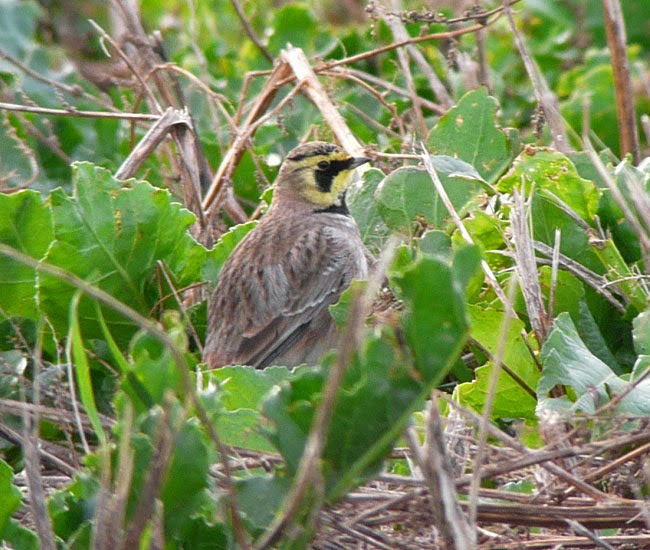
The clifftop fields at West Runton came up trumps again on the 7th when 5 birds got up from infront of me, 4 of which were Snow Buntings, and after a further bit of searching I was delighted to see that the 5th was a Shorelark (197) and which was only the fourth occasion I've recorded one on the patch.
Returning on the 8th I also managed a few photos of the Snow Buntings there too.
The 10th saw me seawatching off Cromer with a good range of waders and wildfowl being on the move, with the undoubted highlight being my first ever patch Black Brant (198) which flew west with a flock of Dark-bellied Brents and Common Scoter. With my non-digiscoping lens on my scope I only managed this poor pic of it as it passed by a fair way out, but at least you can pick it out of the flock by its gleaming white flanks, and even the extensive neck collar is just about visible!
On the subject of poor record shots here's one of a Great Northern Diver which was present off the seafont too!
After being somewhat of a near-permanent fixture on Felbrigg Lake during previous years, it has been disappointing that the Mandarins have only been present on a handful of my visits this year, but in the last week I've recorded them on my last three visits with at least two males and a female back roosting in their usual spot amongst the trees, so its nice to see they are still hanging in there despite their apparent drastic drop in numbers from the double figure counts in years past.
More seawatching on the 19th produced another Little Auk, plus a Little Egret along the beach, and on the 21st I thought a fairly late Sooty Shearwater was going to be the highlight until I delightedly picked up a Slavonian Grebe (199) on the sea which I think is only the 4th I've ever recorded on the patch, and keeping up my run of rubbish records shots for the benefit of the challenge here's another one!
December
So only one more was needed for the big 200 but try as I might I was failing miserably to turn up anything new and it looked as though the month and the Challenge would fizzle out in some disappointment. However there was always Plan B, i.e the rules of the challenge stated that as long as you were in the patch the bird didn't need to be, so the last few days of the month saw me atop Beeston Bump staring westwards towards the Salthouse/Cley area! An ultra clear day was vital for optimum viewing, but fortunately there were a couple even if the cold wind made it very uncomfortable to spend a prolonged time up there.
After a lot of eye-strain, and help from my Dad who had headed along the coast to be on site, I finally managed to secure identifiable flight views of a Hen Harrier (200) and a flock of Ruff (201) to break the double-hundred and as it subsequently transpired record the most out of any of the other competitors in the challenge by 3 birds, and a very satisfying reward for a lot of hard work and many many hours flogging the patch in all weathers.
So a truly excellent, and my best ever, year on the patch, especially considering I had also recorded Red-breasted Flycatcher and Kingfisher within my normal patch boundary too, along with Pale-bellied Brent, White Wagtail and this Quail sp!