Pages

Saturday, 31 March 2012

Fort De Soto

For the second day of our trip to the Gulf coast, we headed north up to the excellent Fort De Soto Park, which is situated at the southern end of the keys which run south of St Petersburg into Tampa Bay. This was probably my favourite site of all those visited due to its potential, and which certainly warranted a lot more time to fully explore then we were sadly able to give it.

After arriving at the park, the first bird on the agenda was the nesting Great Horned Owls up at the north end of the park, and after quickly finding the cordoned off area, Mum, Dad and baby were quickly found and all showing well up in the trees there.


A quick walk through the trees from the Owls and I was on the North Beach and the shorebird protected breeding area. Scanning the lagoon there and my next target, the wintering Long-billed Curlew, was quickly located, and like most of the other shorebirds encountered, it gave excellent close-up views.


Also on the lagoon were Black Skimmers, Willet, Reddish Egret, Royal, American Sandwich & Forsters Terns and a few Marbled Godwits.


Being the only target species that I failed to find at the sites visited yesterday, I was determined to find a Snowy Plover today, but it wasn't going to be easy as the small shorebirds were congregated a fair distance away inside the roped-off area and there was a fair bit of dead ground there too, plus the rapidly increasing temperature was creating a lot of heat haze to hamper viewing further still. However Wilsons, Piping and Semi-palmated Plovers could with patience all be picked out from the flock, but frustratingly there was no sign of a Snowy. An American Oystercatcher was also picked out, along with a pair of recently arrived Least Terns.


Then finally after over 2 hours of meticulously sifting back and forth through the visible part of the flock, much to my relief and delight, a Snowy Plover materialised out of the haze and showed well if distantly, and completed the hoped for haul of waders during the trip.


Heading back across the north beach towards the trees around the picnic shelters, a few Brown Pelicans drifted over.


In the trees by the picnic shelters I located a fairly large feeding flock of warblers, with Yellow-throated, Yellow-rumped, Pine & Palm Warblers all present.

Earlier whilst watching the Owls, I had met a group of U.S birders who had apparently done all the known hotspots in the park and said that there were no migrants around at all so I wasn't expecting to see any myself but whilst continuing to enjoy the warbler flock, suddenly there in front of me was this glowing bright yellow warbler! After a few expletives as to what it was, I tried to stay cool and note its features, and with reference to the field guide I realised it was actually an easy task to identify and that it was a Prothonotary Warbler, and a stonking male to boot!

Sadly it was lost from view all too quickly presumably having moved on with some of the other warblers which had now dispersed, but in searching the area to trying to relocate it I chanced upon another totally unexpected migrant in the form of this Blue Grosbeak.


After enjoying the grosbeak for a while, I started the walk back south towards the fort area, and after a short while noticed a bird sitting on some distant overhead wires. Raising my bins I was amazed to see it was a Kingbird sp. so I quickly took the record shot below to aid the id, and a quick look in the book confirmed it was an Eastern Kingbird.


So in the space of less than an hour I'd managed to find 3 totally unexpected migrants, all of which had presumably been grounded the day before last by the only rain we had during the fortnight, and which was without question one of those magical birding moments that stay with you for ever.

I carried on walking south and was treated to the sight of a Magnificent Frigatebird drifting over high up and also noted a Loggerhead Shrike, a singing House Wren and a few Barn Swallows passing overhead. My attention was then grabbed by a call which alerted me to the fact that a Black-hooded Parakeet had just alighted on the roadside wires, and it then flew to a tree stump where it was joined by its mate before they both returned to the wires to indulge in a bout of mutual preening before heading off over the trees calling loudly.


Arriving at the fort, and after a short wait I located the over-wintering Lark Sparrow, a Florida rarity, which showed well feeding on the ground only a few feet away.


Sadly the day was fast coming to an end but as we set off home, a quick stop off a mile or so north of the park produced a good sized flock of Redheads along with a few Lesser Scaups at the Tierra Verde pond. Finally driving back round the south side of St Petersburg 3 probable Monk Parakeets flew over the road, but unfortunately didn't land to enable the id to be clinched, but nevertheless it had been a truly excellent day at what is a truly excellent site.

Mead Gardens

With my last full day coming round far too quickly, it was a case of selecting a site which could offer the most potential of adding a new species or two, and Mead Gardens was chosen as that likely location. Situated in northeast Orlando, on the north side of Lake Sue, similar to Leu Gardens, the site provides an excellent bit of habitat in the middle of surburbia for both resident species and birds passing through on migration.

The main reason for the visit was the reports of Barred Owls being seen regularly there, and shortly after arrival I had the fortune to bump into the park ranger who kindly led me to the area of trees where they had been seen, and to my obvious delight the two Barred Owls were still there roosting out in the open.


Checking out the rest of the gardens, a Coopers Hawk flew through, briefly alighting in a tree before flying off again, and then a Red-shouldered Hawk flew down to the nearby stream to have a bathe before flying up onto a bench to dry out.


Palm Warbler, Northern Cardinals and Blue-gray Gnatcatchers were all noted as we walked along the edge of the stream, in which a Great Blue Heron was fishing.


Further along the stream 3 drake Wood Ducks were also encountered and a number of Turtles were present too.


Carrying on further we then, to our complete amazement, stumbled upon an Eastern Screech Owl roosting out in the open, and far from being spooked by our presence, it just sat there looking at us completely unconcerned!


So a really unexpected bonus, and the third Owl in two days to complete the set of four for the trip. We carried on round and came upon a large damp area covered in willows through which a boardwalk went, and which looked like it would be really good in migration times. Both Hermit Thrush and Northern Flicker were seen here, along with a Downy Woodpecker and Carolina Wren, and then heading back to the car we came across a small flock of Cedar Waxwings feeding up in the trees.


We then headed over to the nw corner of Lake Toho to the area by Kissimmee Power station which in previous years had hosted some Monk Parakeets, and although I hadn't heard of any recent reports from there, it was worth a look. Sadly none were found but it certainly wasn't a wasted journey as whilst checking out an unfamiliar call which sounded vaguely parakeet like, I discovered that the bird making the call was infact a Great Crested Flycatcher which showed well but briefly.

Also seen here whilst searching were Muscovy Ducks, a White-winged Dove and a Yellow-bellied Sapsucker.

Lake Lizzie

Sadly my day of departure had arrived, but with a few hours before my flight we headed off for another look round the southern trails at Lake Lizzie. Gray Catbird, and Pine and Palm Warblers were seen as we walked down to the woods, where we also had Northern Parula and a White-eyed Vireo.


A few Tree Swallows and a single Purple Martin were feeding overhead, and after having not seen one for a few days, two Swallow-tailed Kites were also seen drifting over and came close enough to finally allow me to get a half decent pic of one.


Although we'd had around ten Downy Woodpeckers during the trip, I'd failed to find a Hairy, so when I found a woodpecker here hopes were again dashed as it was 'just' another Downy. However as I was watching it another woodpecker flew in and chased it off before disappearing into a nesthole and although I'd presumed that it too was also a Downy, I had some nagging doubts. Luckily I had taken a quick snap of it before it went in, and upon reviewing the photo later the longer bill, and unmarked white outer tail feathers (cf the pic of the Downy above) indeed pointed to this actually being a Hairy Woodpecker, which was the consensus too when I asked for opinions on the internet. So happily I'd finally managed to catch up with one and which would be my last new bird of the trip.


Walking round the trails further Snowy Egret and Little Blue Heron were seen, along with a Wild Turkey. Also the Owl sp. (probably a Great Horned) was again seen flying through the trees in the exact spot that it had been seen on our previous visit here, and a couple of Carolina Wrens were seen too.


Heading back towards the car park a couple of Black Vultures sat in a tree overhanging the path keeping their eye on us as we passed underneath.


Final highlight of the morning, and indeed the trip, was this Gopher Tortoise which crossed the path in front of us.


So the end of a truly brillant trip was here, with masses of great memories to take home, and I'd definitely recommend Florida as a birding destination. Altogether I recorded a total of 160 species during the trip including 97 new birds, plus a further 25 only ever seen once before on various twitches here in the UK.

The complete list is detailed below, along with the various animals and reptiles etc that we saw. A good number of both Butterflies and Dragonflies were encountered and those identified are also listed below, although sadly a number of others had to be left unidentified due to brevity of views, but hopefully I'll be revisiting the States again in the future so there's always next time...

Florida - Species recorded

The following is the complete list of species recorded during the trip:-

   1-Pied-billed Grebe
   2-American White Pelican
   3-Brown Pelican
   4-Magnificent Frigatebird
   5-Northern Gannet
   6-Anhinga
   7-Double-crested Cormorant
   8-American Bittern
   9-Least Bittern
  10-Great Blue Heron
  11-American Great White Egret
  12-Snowy Egret
  13-Reddish Egret
  14-Little Blue Heron
  15-Tricolored Heron
  16-Cattle Egret
  17-Green Heron
  18-Black-crowned Night Heron
  19-Glossy Ibis
  20-White Ibis
  21-Roseate Spoonbill
  22-Wood Stork
  23-Black-bellied Whistling Duck
  24-Muscovy Duck
  25-Wood Duck
  26-Mallard
  27-Mottled Duck
  28-American Wigeon
  29-Northern Shoveler
  30-Blue-winged Teal
  31-Redhead
  32-Lesser Scaup
  33-Ring-necked Duck
  34-Hooded Merganser
  35-Red-breasted Merganser
  36-Black Vulture
  37-Turkey Vulture
  38-Osprey
  39-Swallow-tailed Kite
  40-Snail Kite
  41-Sharp-shinned Hawk
  42-Coopers Hawk
  43-Northern Harrier
  44-Red-shouldered Hawk
  45-Red-tailed Hawk
  46-Bald Eagle
  47-Crested Caracara
  48-American Kestrel
  49-Peregrine
  50-Wild Turkey
  51-Northern Bobwhite
  52-Sora
  53-American Coot
  54-Common Gallinule
  55-American Purple Gallinule
  56-Limpkin
  57-Whooping Crane
  58-Sandhill Crane
  59-Black-bellied Plover
  60-Killdeer
  61-Semi-palmated Plover
  62-Piping Plover
  63-Snowy Plover
  64-Wilsons Plover
  65-American Oystercatcher
  66-American Avocet
  67-Black-necked Stilt
  68-Greater Yellowlegs
  69-Lesser Yellowlegs
  70-Spotted Sandpiper
  71-Willet
  72-Marbled Godwit
  73-Long-billed Curlew
  74-Ruddy Turnstone
  75-Sanderling
  76-Dunlin
  77-Western Sandpiper
  78-Least Sandpiper
  79-Stilt Sandpiper
  80-Short-billed Dowitcher
  81-Wilsons Snipe
  82-Bonapartes Gull
  83-Laughing Gull
  84-Ring-billed Gull
  85-American Herring Gull
  86-Caspian Tern
  87-Royal Tern
  88-Cabots Tern
  89-Forsters Tern
  90-Least Tern
  91-Black Skimmer
  92-White-winged Dove
  93-Mourning Dove
  94-Eurasian Collared Dove
  95-Common Ground Dove
  96-Black-hooded Parakeet
  97-Eastern Screech Owl
  98-Barred Owl
  99-Great Horned Owl
100-Burrowing Owl
101-Ruby-throated Hummingbird
102-Belted Kingfisher
103-Yellow-bellied Sapsucker
104-Red-headed Woodpecker
105-Red-bellied Woodpecker
106-Red-cockaded Woodpecker
107-Downy Woodpecker
108-Hairy Woodpecker
109-Pileated Woodpecker
110-Northern Flicker
111-Eastern Phoebe
112-Great Crested Flycatcher
113-Eastern Kingbird
114-Loggerhead Shrike
115-White-eyed Vireo
116-Blue-headed Vireo
117-Blue Jay
118-Florida Scrub Jay
119-American Crow
120-Fish Crow
121-Tree Swallow
122-Barn Swallow
123-Purple Martin
124-Tufted Titmouse
125-Brown-headed Nuthatch
126-Marsh Wren
127-Carolina Wren
128-House Wren
129-Ruby-crowned Kinglet
130-Blue-gray Gnatcatcher
131-Eastern Bluebird
132-Hermit Thrush
133-Gray Catbird
134-Northern Mockingbird
135-Brown Thrasher
136-Cedar Waxwing
137-European Starling
138-Northern Parula
139-Yellow-rumped Warbler
140-Palm Warbler
141-Pine Warbler
142-Yellow-throated Warbler
143-Black and White Warbler
144-American Redstart
145-Prothonotary Warbler
146-Blue Grosbeak
147-Northern Cardinal
148-Eastern Towhee
149-Bachman's Sparrow
150-Grasshopper Sparrow
151-Chipping Sparrow
152-Lark Sparrow
153-Savannah Sparrow
154-Swamp Sparrow
155-Eastern Meadowlark
156-Red-winged Blackbird
157-Common Grackle
158-Boat-tailed Grackle
159-Brown-headed Cowbird
160-House Sparrow

(New species for me highlighted in red)


 Red-shouldered Hawk


Animals, Reptiles, Amphibians etc

Racoon
Fox Squirrel
White-tailed Deer
Wild Hog
Skunk
River Otter
Gopher Tortoise
Zebra!
Manatee
American Alligator
Tree Frog
Southern Black Racer Snake
Various Gecko's/Lizards
Turtles (inc Florida Redbelly Cooter & Red-eared Slider)


Butterflies

Mangrove Skipper
Clouded Skipper
Fiery Skipper
Long-tailed Skipper
Whirlabout
Common Buckeye
Mangrove Buckeye
Large Orange Sulphur
Little Yellow
Cloudless Sulphur
Great Southern White
Phaon Crescent
American Painted Lady
Red Admiral
White Peacock
Carolina Satyr
Cassius Blue
Ceraunus Blue
Eastern Pygmy Blue
Gulf Fritillary
Monarch
Viceroy
Palamedes Swallowtail
Polydamus Swallowtail
Zebra Swallowtail

Mangrove Buckeye 

 Gulf Fritillary

 Monarch

White Peacock

Dragonflies

Blackwater Clubtail
Cypress Clubtail
Blue Dasher
Carolina Saddlebags
Eastern Amberwing
Eastern Pondhawk
Golden-winged Skimmer
Roseate Skimmer
Slaty Skimmer
Great Blue Skimmer
Halloween Pennant
Little Blue Dragonlet
Seaside Dragonlet
Prince Baskettail
Slender Baskettail
Regal Darner
Variable Dancer
Ramburs Forktail

Blue Dasher 

Slender Baskettail 

Blackwater Clubtail 

Eastern Pondhawk 

Halloween Pennant

Wednesday, 29 February 2012

Little to report

As expected we are currently in the midst of the mid-Feb to mid-March lull, with little new of note having been encountered round the patch over the last few weeks, the only bright spot being a large finch flock at Northrepps which contained very notable numbers of both Yellowhammers and Reed Buntings.

The Tawny Owl remains faithful to its roost tree in Warren Wood, with the photo below showing the typical view of it.


Thursday, 16 February 2012

Felbrigg

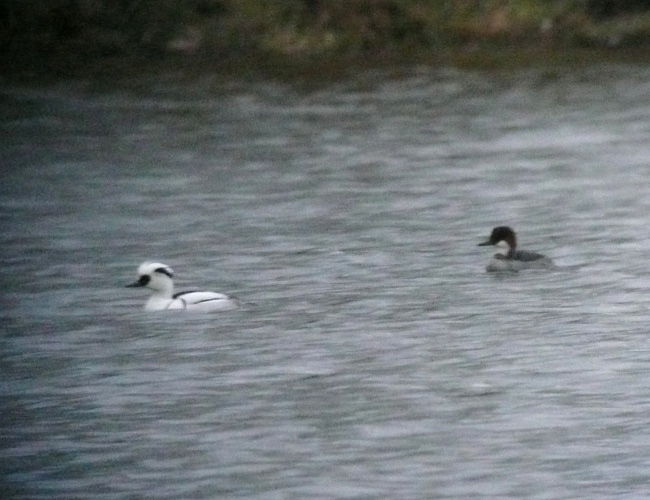
An early morning visit to Felbrigg revealed that yesterdays Smew were still present, although they were later sadly flushed by a birders over enthusiastic pointing and shouting to his companions when he spotted them! They never really came close enough for high quality pics, but it was still a real pleasure to just enjoy them, especially the beauty of the drake.


A good number of other wildfowl were present on the lake including a pair of Shelduck and 2 drake Pochard which were both new in, with other notable species present being a single Goldeneye, the Whooper Swan and 2 drake and 4 female Mandarins.

Wednesday, 15 February 2012

Continued freezing conditions produces more birds

A check of the normally wader-less beach at Overstrand on the 5th produced an amazing tally of 12 different species, most of which had obviously been frozen out of their usual haunts and probably pushed over from the continent  - Bar-tailed Godwit, Curlew, Knot, Grey Plover, Golden Plover, Lapwing, Ringed Plover, Redshank, Oystercatcher, Dunlin, Sanderling and Woodcock were all recorded, with the latter watched as it came in-off before landing on the beach. 

A check of the reservoir on the 6th revealed the big surprise of a Coot (115), a local rarity away from Felbrigg, and a nice addition to the growing list of birds recorded on there.


Daily checking of the lake at Felbrigg failed to produce the hoped for Smew, with a couple of Pochard being the only new arrivals; the Whooper Swan continues to linger. On the 7th I decided to check the stream which runs south of the lake for Jack Snipe, but this was more in hope than expectation, although with good numbers of Common Snipe in evidence as I walked along hopes grew, and eventually one was flushed which, unlike all the others, rose silently and flew only a short distance low along in front of me before pitching down again in the stream. I managed to see where it had landed but it again took flight before I could get a decent look at it, but thankfully this time it flew right past me at close quarters, giving me the opportuntity to confirm it was indeed a Jack Snipe (116) as it gave excellent flight views before returning to the stream further along, where I left it in peace really pleased with the find.

A flock of 11 Bewicks Swans (117) flew over Felbrigg Park on the 9th, and one of the Sheringham Purple Sandpipers (118) did the honourable thing of flying beyond the east end of the prom and consequently into the patch whilst I was there on the 13th.

The 15th finally produced what I'd hoped for over the last 10 days with a pair of Smews (119) gracing Felbrigg Lake, and as ever the male was just truly stunning to see with the added bonus of it being my first one ever for the patch following the 3 redheads previously recorded. Sadly with it being beyond dark (well at least for my 50x lens) only a few grainy pics were possible but still a nice record of their occurrence, and hopefully they'll hang around to allow some better shots to be obtained tomorrow.


Four pairs of Mandarins were also welcome visitors to the lake, and it was really nice to know that they are still about locally in fairly good numbers despite spending the majority of their time elsewhere now. The Whooper Swan was as usual in amongst the Mutes, and a Goldeneye was also present.

Saturday, 4 February 2012

Cold weather gets the birds moving

A visit down to Felbrigg Lake on the 3rd revealed that it was virtually frozen over save for a ice-free patch in the middle around which all of the birds had congregated which included the Whooper Swan, 23 Teal, the pair of Wigeon, a few Gadwall, a pair of Canada Geese, Greylags, 22 Mute Swans, Tufted Ducks, Mallards and a nice gathering of Gulls.


Whilst walking back across the field towards the hall, I paused to check the Golden Plover flock and was pleasantly surprised to see that they had been joined by a Curlew (111) which is the first one I have ever seen at the site, and probably also the first one actually seen on the deck anywhere on the patch as they are usually seen just passing overhead or moving during seawatches, so a very notable record indeed.

Moving on to West Runton revealed that there was a good cold-weather movement of waders passing by, predominantly Dunlin (112) with numerous flocks going through west. Also notable were 5 Harbour Porpoise seen heading west (3 singles and a pair).

I headed back down to West Runton again today to check the wader passage, and with it being low tide first thing hoped that a few may stop to feed on the exposed beach. I wasn't disappointed as in addition to the usual Grey Plovers, Lapwings, Redshank, Turnstones, Oystercatchers and Ringed Plovers were a dozen or so Dunlin, along with a few Knot and best of all 5 Bar-tailed Godwits (113) which were the first ones I have ever seen here.


There was also a small passage of wildfowl going past with a few Wigeon and Mallards on the move, plus a few flocks of Dark-bellied Brent Geese, one of which I was delighted to see contained a Pale-bellied Brent (114). Adding to the wader-fest a couple of Common Snipe flew over and a nice flock of Golden Plover were in the fields along the beach road.

Thursday, 2 February 2012

Firecrest

The month got off to a good start with a Firecrest (110) in the woodland behind Felbrigg Hall yesterday. Down on the lake a Goldeneye was present with the Tufted Ducks, a pair of Wigeon were new in, and the Whooper Swan continues to linger. A flock of 70+ Golden Plover were also new arrivals on the grassy field in front of the hall.


Highlight of today was a Little Gull lingering amongst a feeding flock of Gulls off West Runton late afternoon, and a couple of Sanderlings on the beach were the first ones I've seen this year on the deck.