Pages

Monday, 30 April 2012

Spring migration finally gets going

With the very unfavourable conditions for most of the month, movement through the patch has in the main been painfully slow. Hirundines have been the most regular migrants seen with a trickle of Swallows, along with the odd House Martin heading along the coast plus a few Sand Martins back prospecting the cliffs. The first Willow Warblers of the spring, a few more Wheatears, a couple of Black Redstarts and a few Yellow Wagtails also put in an appearance, but most noteworthy was the influx of Ring Ouzels with 9 seen around the patch including 3 together at West Runton and a pair at Felbrigg.


Things started to pick up in the last week of the month with the first few Swifts of the year going through and Common Whitethroats returning to territories. A walk through Felbrigg Park on the 27th produced the welcome sight of a flock of 25 Crossbills, the first seen there for quite a few months, and on the 28th a Short-eared Owl west over East Runton was unexpected bonus.

With the strong north-easterlies on the 29th, a seawatch produced a single Manx Shearwater, along with Sandwich Terns, Fulmars, Kittiwakes, Gannets and Guillemots.

Then with the welcome change in the weather, there was a sudden flood of migrants on the last day of the month with Wheatears being the most numerous arrivals, with small numbers of Whinchats mixed in, and a fine male Redstart was a welcome find at East Runton.


However the bird of the day was definitely the all too brief Citrine Wagtail at West Runton, which unlike the one last spring was mobile and elusive and posed only briefly and distantly for a pic before moving on.


Friday, 6 April 2012

Back on the patch

Since my return from Florida, the first few days of the month have been spent catching up with the few spring migrants that have arrived so far, and also a few patch goodies too.

Chiffchaffs and Blackcaps are now singing round the patch and other migrants noted have included a couple of Wheatears, 3 Black Redstarts and the first Stonechat of the year. Seawatching in strong north-easterlies produced a couple of Sandwich Terns, and a few Gannets, Kittiwakes and Common Scoter, but most notable was a big passage of Fulmars heading east, which was good to see given their virtual absence offshore during recent years.

Rarer still has been a Great Grey Shrike on the south side of Northrepps, a Hooded Crow associating with a large feeding corvid flock, and nearly as unusual patchwise were a couple of Grey Partridges.

Saturday, 31 March 2012

Florida

Having only solely birded in Britain and Ireland, I finally took the plunge and embarked on my first foreign trip. Florida was the destination selected due to relatives having a place out there, and as they have developed an interest in birds since being there, they were more than happy for us all to go out in the field every day.

St Cloud, just to the south of Orlando, was my base for the fortnight, and with plenty on offer in the immediate area we primarily concentrated on the central Florida sites within easy travelling distance of home, but also had a couple of day trips over to the east coast, plus a two-day trip to the gulf coast for waders etc as well. I've detailed below the main sites that we visited along with the birds etc encountered at each location, and have also included a full species list at the end. Hopefully this trip report will be of use to anyone visiting the area in the future, and naturally I've included a few photos of the most notable species seen which I hope you enjoy.

Flying into Orlando early evening, Turkey Vulture was my first new bird as one sailed past the aircraft as we came in to land, and then a Great Blue Heron was noted on one of the airfield pools along with an American Great White Egret. Sadly after the time consuming clearing of immigration and customs darkness was quickly falling so any more birds would seemingly have to wait till the morning, although a pair of Sandhill Cranes were seen flying over the car on the way home along with a big flock of corvids heading off to roost.

Next morning I awoke to the sound of what transpired to be Northern Mockingbirds singing from the rooftops, Palm Warblers were noted feeding in the bushes around the house, and Mourning Doves adorned the rooftops along with the Mockingbirds.

A quick trip to the local supermarket to stock up on supplies produced a Northern Cardinal on roadside wires, and a family of Killdeer in the car-park! Turkey Vultures were evident overhead and a pair of Sandhills were feeding on a roadside verge.

It was then on to our first birding site, East Lake Toho, and visited the south shore on the north side of St Cloud. The lake is one of the best sites for one of the specialities of the area, Snail Kite, and two or three performed excellently as they hunted over the shoreline reedbeds occasionally landing too.


Having never visited the States before, it was a little overwhelming at first with birds and unfamiliar calls everywhere, making it very difficult to know which way to look, or what to look at. The waters edge held Common Gallinules, Limpkin, Tricolored Heron, White Ibis and Wood Stork, along with Little Blue Heron, Glossy Ibis, Cattle and Am. Great White Egrets and a Great Blue Heron.

As well as the Snail Kites, a fine adult Bald Eagle was seen soaring over the lake, along with Ospreys, Purple Martins and Tree Swallows were also noted overhead as were a couple of Red-shouldered Hawks soaring around with an Anhinga.

Aside from the eerie waling call of the Limpkin, the reedbeds and bushes were full of the noisy calls of Boat-tailed and Common Grackles, and Red-winged Blackbirds were busily chasing each other about.


A walk along the edge of the pools produced a Swamp Sparrow, a couple of Belted Kingfishers, Double-crested Cormorants, American Coots, a couple of female Hooded Mergansers, a Palm Warbler and a Sora Rail. Both American and Fish Crows were also noted, and with their calls being the best id feature to separate them, it was nice that they were pretty much always vocal.


Other species noted included Ring-billed Gulls, Northern Cardinals, Northern Mockingbirds, and a pair of Sandhills with young. Finally although they felt rather 'plastic' a number of the established population of Muscovy Ducks of varying plumage were also present.


It was then onto Lake Lizzie, and to explore the woods on the east side of the lake on the north trail loop, with a Red-tailed Hawk noted soaring overhead on the way.

A Hermit Thrush was the first bird encountered there, and then as we made our way through the trees both Downy Woodpecker and a Yellow-bellied Sapsucker were briefly seen. We then located our main target of the site with a Red-headed Woodpecker putting on an excellent show in front of us.


Walking along various birds could be heard rustling in the undergrowth and with a lot of patience Brown Thrasher, Eastern Towhee and Gray Catbird were all nailed. A number of songs were also heard as we went round and again with patience both White-eyed and Blue-headed Vireos were seen, along with the now familar Northern Mockingbirds.


On the way back a flock of Chipping Sparrows were found in the car park, and a couple of Cedar Waxwings were watched feeding atop a tree along the entrance road rounding off a truly excellent and mind-blowing first day.

Joe Overstreet Road Area

Birding from the house first thing produced what became the regular Mockingbirds, Mourning Doves and Palm Warblers, and as the temperature started to rise birds making use of the first thermals of the day became evident with my first Black Vulture of the trip noted, along with Turkey Vultures, a Bald Eagle and Wood Storks.  A flock of Cedar Waxwings flew over calling, and these were to be noted most mornings, and a Sharp-shinned Hawk whizzed through the garden at ultra high speed.

Destination for the day was to be the Joe Overstreet area which runs down to the eastern shore of Lake Kissimmee. A stop by the property at the top of the road produced the first of many Red-bellied Woodpeckers to been seen on the trip, but more surprisingly it was seen sparring with a Red-headed Woodpecker. A Fox Squirrel was also noted here feeding on the ground amongst the trees.

As we progressed slowly down the road, the song of Eastern Meadowlarks soon began to fill the air, with one located sharing a tree with a Loggerhead Shrike. A number of others were then seen in the fields and then as hoped, we were treated to excellent views of one on a roadside post.


Driving further down the road towards the lake we noted Killdeer and the first Savannah Sparrow of the trip, and then the silhouette of a raptor heading towards us immediately rang alarm bells and getting it in the bins revealed the unmistakable sight of a stunning Swallow-tailed Kite effortlessly gliding over the tree-tops along the road.

Continuing down to the lake, more Loggerhead Shrikes were encountered on the roadside wires and a quick stop produced a distant American Kestrel perched up.

Arriving at the lake revealed a host of marsh birds were present, the usual Grackles and Red-winged Blackbirds were along the reed edges and around the pools were Wilsons Snipes, Dowitchers and both Greater and Lesser Yellowlegs. Great Blue Herons, White Ibis and Glossy Ibis fed around the pools as did this stunning Little Blue Heron.


A flock of 20 or so Brown-headed Cowbirds were feeding nosily around the car park, and then it was over to the raptors to entertain as a Crested Caracara flew down onto the marsh, a Turkey Vulture perched on the bonnet of a nearby car, and then a Bald Eagle flew along landing on a post where it posed for photos.


A walk further along the lake edge revealed a roosting flock of Ring-billed Gulls, Forsters Terns and superb Black Skimmers.


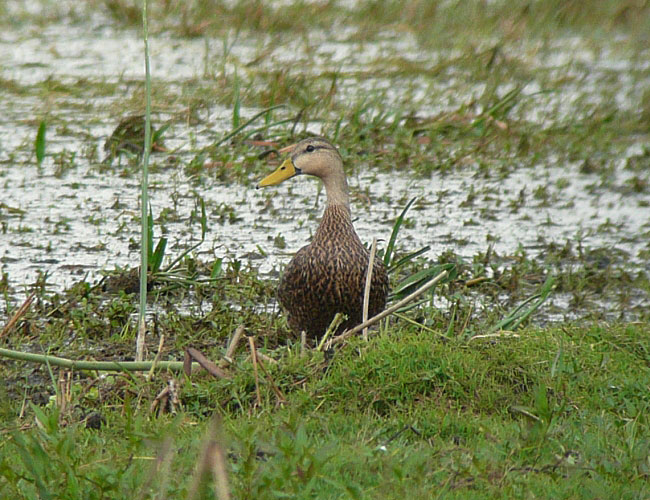
Killdeer, Common Gallinule, Savannah Sparrow and Palm Warbler were also noted, along with a couple of Mottled Ducks.


Heading back up Joe Overstreet Road, a confiding Bald Eagle was watched atop a roadside telegraph pole, and then a stop by the junction with Sailor Hammock Road produced a Burrowing Owl trying to hide up against a hedgerow.


Heading further back north along the road, a Wild Turkey ran alongside the car before crossing the road into cover, and the final highlight was the first Alligator of the trip in a roadside pool.

Merritt Island

Today was the first of two trips we made over to Merritt Island National Wildlife Refuge, and on the drive over Swallow-tailed Kite, Belted Kingfisher, Eastern Meadowlark and Wild Turkey were all seen from the car, along with a group of 2 Caracara's, a Black Vulture and a Bald Eagle feeding on a bit of road-kill.

Arriving at the causeway over to Merritt Island from Titusville, the first Willet of the day was noted feeding on the waters edge before flying off revealing its striking black & white wing pattern. Calling in at the visitors centre a Tufted Titmouse was watched in trees in the car park along with a Yellow-rumped Warbler. The v.c trail was fairly quiet aside from both White-eyed and Blue-headed Vireo's and a pair of Northern Cardinals. Gecko's/Lizards of various sizes and colours were seen everywhere we went during the trip, with this one having a peek out from its hiding place.


A walk round the scrub ridge trail failed to produce any Scrub Jays with the search being curtailed due to the mosquitoes deciding it was lunch time, so we cut our losses and headed for the 7 mile long Black Point Wildlife Drive, but not before a Pileated Woodpecker flew across the road on the way.

The pools along the wildlife drive produced a host of species including both Brown and American White Pelicans, and a small flock of American Avocets.


Pied-billed Grebes and American Coots adorned the pools along with Northern Shoveler, Blue-winged Teals and Lesser Scaups.


Waders included more Willets, along with Dowitchers, Greater and Lesser Yellowlegs, Killdeer and Dunlin, and a few Reddish Egrets were performing their famous dancing feeding action as they chased fish around the lagoons.


All the other usual Herons, Egrets and Ibis were well represented too including the Tricoloured Heron and Snowy Egret below.


A couple of Northern Harriers were watched quartering the marshes and a Roseate Spoonbill was also noted flying over.


Caspian Terns and Ring-billed Gulls were noted roosting on one of the pools, and a walk along one of the side trails produced a Sora feeding along a ditch.


Further along the ditch a Green Heron was flushed, but co-operatively only flew a short way along and landed in the vegetation on the waters edge.


Last highlight of the Wildlife Drive, and of the day, was this Belted Kingfisher perched up on a bush overlooking a pool alongside the track.

Three Lakes Wildlife Mgt Area

The day started well with a Blue Jay from the house, and the Sharp-shinned Hawk was again seen, this time showing well as it soared round over the estate.

First destination of the day was to be the Three Lakes Wildlife Management Area, which is just to the south-east of Joe Overstreet Road, and which is most well known for its Red-cockaded Woodpeckers. Arriving at the hunters campsite, we were informed that a turkey shoot was in progress and although no-one has yet to be shot by accident, we were advised to stay to the main track and not wander off through the trees!

Along the edge of the camp we found a feeding flock of Warblers which contained both Pine Warbler and a simply stunning Yellow-throated Warbler, along with the usual Palm Warblers. A House Wren was also watched skulking through the vegetation before showing well up on a fence. 

Further along the main track a small flock of Chipping Sparrows and Palm Warblers were seen feeding on the forest floor and then a superb Eastern Bluebird showed very well right alongside the track.


Having seen one briefly by the Hunters Camp, another Bachman's Sparrow was watched as it sang from a pine tree giving excellent prolonged views of this typical skulker.


Despite finding numerous Red-bellied Woodpeckers our main quarry continued to elude us and other visiting birders over the next hour or so, and then I detected a faint tapping in the distance which was undoubtedly worthy of further investigation. After a lot of searching to try to pinpoint the location the tapping was coming from I eventually found the culprit and was delighted to see that it was indeed a Red-cockaded Woodpecker which went on to show well as it moved from tree to tree, with the lower pic showing the usually hidden red 'cockade'.


Before we left the main area of trees, an Eastern Towhee was watched as it sang from one of the pines.


Moving on to an area further along the track of mainly deciduous trees, a pair of Blue-gray Gnatcatchers were located, with this species becoming one of my favourite birds seen during the trip and which could be easily 'pished' whereupon they flitted around the branches just above your head showing excellently. The first Parula Warbler of the trip was also seen here, along with White-eyed Vireo and Yellow-bellied Sapsucker.  Another warbler was seen here briefly which at the time I thought was a Prairie Warbler but after failing to find another during the remainder of the trip in retrospect I started to doubt the id infavour of it being just a bright Palm Warbler, so probably it will be left as one of the few birds that got away.

A Swallow-tailed Kite was seen passing overhead, along with the now regular Red-shouldered Hawks and Black and Turkey Vultures, and a Wild Turkey was also seen which thankfully had avoided the guns.

Moss Park

Next place that we visited was Moss Park on the south-east side of Orlando along the western edge of Lake Mary Jane. With a mixture of trees it proved a good site for woodland species, with one area proving very productive producing Yellow-throated, Yellow-rumped and Palm Warblers, Northern Parula, Blue Jays, Blue-gray Gnatcatchers, Northern Cardinals, Gray Catbird, Chipping Sparrows and Red-bellied Woodpeckers. 

Walking further into the park, my attention was drawn to some tapping coming from the trees in front and after a little searching a Brown-headed Nuthatch was located and then a couple more were seen as they chased each other through the trees defending their territory and a nest hole which was under excavation.


Further along a group of 4 Downy Woodpeckers were also found sparring together and showing well as they did so.


Throughout the park were a number of Sandhill Cranes, and it was amazing just how tame this species was throughout Florida as just driving around they could even be seen feeding unconcerned on peoples front lawns! The ones in the park were no different allowing very close approach, including a pair with a couple of chicks.


Final highlight in the park was a Fox Squirrel feeding in the car park.


Calling in at East Lake Toho produced an array of raptors including a Swallow-tailed Kite overhead, Snail Kites and a Northern Harrier quartering the lake edge, and an American Kestrel perched up in a tree.